Deadheading Hydrangeas: The Simple Way To Keep Your Flowers Blooming
Deadheading Hydrangeas: The Simple Way to Keep Your Flowers Blooming
Hydrangeas are a popular choice for gardeners because of their beautiful blooms. But did you know that deadheading hydrangeas can help you keep your flowers blooming for longer?
Deadheading is the process of removing spent blooms from a plant. This encourages the plant to produce new flowers, and it can also help to improve the overall appearance of the plant.
In this blog post, we will discuss the benefits of deadheading hydrangeas, how to do it properly, and when to deadhead. We will also provide some tips for getting the best results.
Benefits of Deadheading Hydrangeas
There are several benefits to deadheading hydrangeas. First, it encourages the plant to produce new flowers. This is because when a hydrangea blooms, it produces seeds. If the seeds are allowed to mature, the plant will focus its energy on producing seeds instead of flowers. Deadheading prevents the seeds from maturing, which tells the plant to focus on producing new flowers.
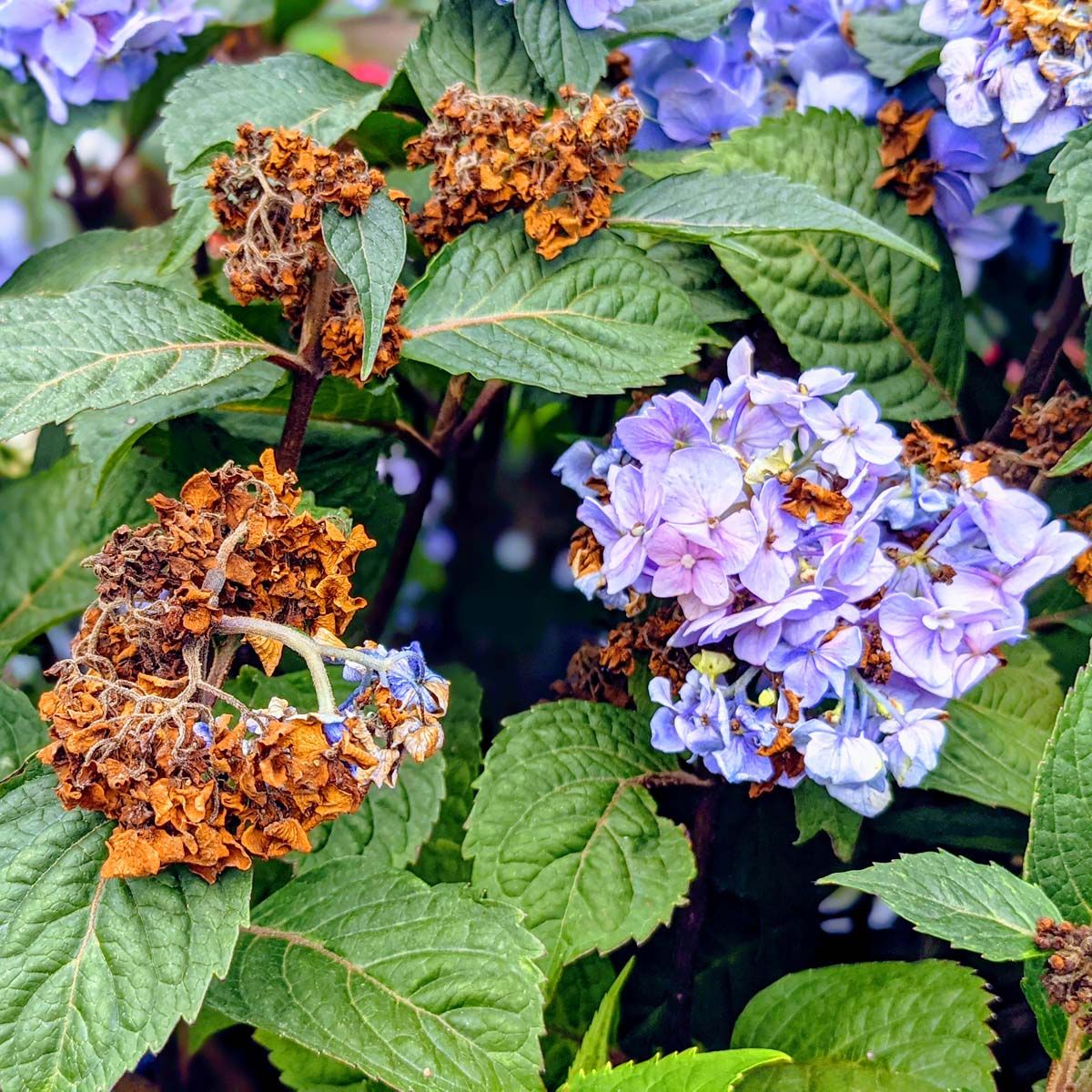
Second, deadheading can help to improve the overall appearance of the plant. Spent blooms can look unsightly, and they can also attract pests and diseases. Deadheading removes these spent blooms, which can make your hydrangeas look neater and healthier.
Finally, deadheading can help to extend the blooming season of your hydrangeas. This is especially true for reblooming hydrangeas, which can bloom twice in a season. If you deadhead the first flush of blooms, the plant will often produce a second flush later in the season.
How to Deadhead Hydrangeas
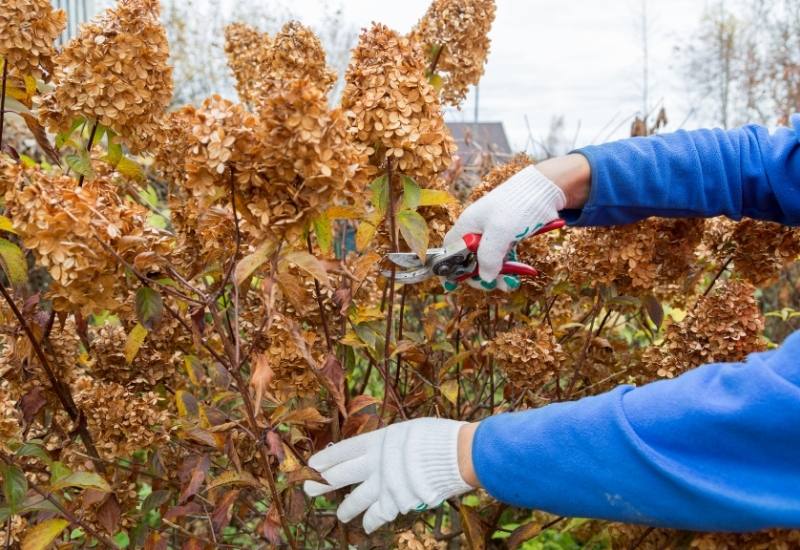
Deadheading hydrangeas is a simple process. All you need is a pair of sharp shears or pruning clippers.
To deadhead a hydrangea, simply cut the stem of the spent bloom just above a healthy leaf node. A leaf node is a small bump on the stem where leaves grow. By cutting just above a leaf node, you will encourage the plant to produce new growth from that point.
It is important to make a clean cut when deadheading hydrangeas. A jagged or messy cut can make the plant more susceptible to pests and diseases.
When to Deadhead Hydrangeas
The best time to deadhead hydrangeas is when the first flush of blooms begins to fade. This is usually in the spring or early summer.
For reblooming hydrangeas, you can deadhead again after the second flush of blooms. However, it is important to stop deadheading by mid-August, as this can prevent the plant from forming buds for next year's flowers.
Tips for Deadheading Hydrangeas
Here are a few tips for deadheading hydrangeas:
- Use sharp shears or pruning clippers to make a clean cut.
- Cut the stem just above a healthy leaf node.
- Deadhead when the first flush of blooms begins to fade.
- Stop deadheading by mid-August.
Conclusion
Deadheading hydrangeas is a simple way to keep your flowers blooming for longer. By following the tips in this blog post, you can deadhead your hydrangeas like a pro and enjoy their beautiful blooms for years to come.
Deadheading hydrangeas is an important part of keeping your plants healthy and blooming beautifully. It involves removing the spent blooms so that the plant can focus its energy on producing new flowers.
There are a few different ways to deadhead hydrangeas, but the most common method is to simply cut the stems below the flower head. You can also make a clean cut just above the first set of leaves below the flower head.
The best time to deadhead hydrangeas is when the first set of blooms begin to turn brown and dry. If you wait too long, the plant may start to produce seed heads, which will sap its energy and prevent it from blooming as well next year.
If you're not sure when to deadhead your hydrangeas, or if you want more detailed instructions, I recommend visiting . This website has a wealth of information on hydrangea care, including a detailed guide on how to deadhead hydrangeas.
FAQ of deadheading hydrangeas
Q: What is deadheading?
A: Deadheading is the process of removing spent flowers from a plant. This helps to encourage new flower growth and keep the plant looking its best.
Q: When should I deadhead hydrangeas?
A: Hydrangeas can be deadheaded throughout the blooming season, but it is best to do it as soon as the flowers start to fade. This will help to prevent the plant from setting seed and will encourage new flower growth.
Q: How do I deadhead hydrangeas?
A: To deadhead hydrangeas, simply use a pair of sharp pruning shears to cut off the spent flower heads. Be sure to cut the stems back to the next set of leaves.
Q: Is it necessary to deadhead hydrangeas?
A: Deadheading hydrangeas is not essential, but it can help to keep the plant looking its best and encourage new flower growth. If you do not deadhead your hydrangeas, the spent flowers will eventually fall off on their own.
Q: What are the benefits of deadheading hydrangeas?
There are several benefits to deadheading hydrangeas, including:
- It helps to prevent the plant from setting seed, which can divert energy away from flower production.
- It encourages new flower growth.
- It keeps the plant looking its best.
- It can help to prevent the spread of diseases.
Image of deadheading hydrangeas
- Image 1: A close-up of a hydrangea flower that has been deadheaded. The dead flower head has been removed, leaving behind the green sepals.
- Image 2: A hydrangea bush with several dead flowers that have been deadheaded. The dead flowers have been removed, leaving behind the green sepals and the healthy stems.

- Image 3: A gardener deadheading a hydrangea bush. The gardener is using a pair of sharp scissors to remove the dead flower heads.
- Image 4: A hydrangea bush in full bloom. The hydrangea bush has been deadheaded, and it is now covered in new buds.
- Image 5: A close-up of a hydrangea bud. The hydrangea bud is a tight cluster of tiny flowers.

Post a Comment for "Deadheading Hydrangeas: The Simple Way To Keep Your Flowers Blooming"